Fraud Prevention Center

Spot the warning signs—avoid scams and fraud.

Report a scam or fraud

Contact us through Chat or call us at 888.723.7328.

Common red flags
  1. Someone contacts you (not the other way around) and pressures you to act quickly.
  2. They ask for personal information like your social security number or your Digital Banking credentials.
  3. They ask you to lie to your credit union about why you need the money for a withdrawal.
  4. They ask you to send them money from an unrecoverable source like a wire transfer, Zelle® or gift cards.
  5. They claim they overpaid you and ask you to send money back.

We’re here to help. The sooner you contact us (via Chat or by calling 888.723.7328, the more likely it is that we can help keep your money safe.

Fraud prevention is a team effort here 

Cybersecurity is a top priority for us, and we work every day to help you protect your identity and safeguard your accounts. Use these resources to learn about the latest phishing scams and security tips for Digital Banking

Information to share and keep secret

Information to share

(ONLY when you contact us)

  • Your name
  • Your security word
  • Your one-time passcode
Information to keep secret

(Even from us!)

  • Your social security number
  • Your Digital Banking login ID and password
  • Your PIN
  • Your account or card number
  • Your Secure Access Code
Suspicious calls and text messages
Just hang up and don't reply

What to do if someone “from Stanford FCU” calls and you aren’t sure if it’s a scam:

  1. Hang up
  2. Call the Member Care Team
  3. Ask to be connected to the person you just spoke to
  4. Explain what happened

Someone sent you a text with links? Don't click!

  • Stanford FCU will never text you links.
  • Never enter your Digital Banking credentials through a text message link. This is how scammers gain control of your accounts!

If you’re concerned about anything above, contact us through Chat or call us at 888.723.7328
What’s the difference between a Secure Access Code and a one-time passcode?

A confusing, but important distinction. Both these codes are sent to you via text or email, but they should be treated differently.

One-time passcode
  • This is a code to verify your identity
  • ONLY give it when YOU call us, not the other way around
Secure Access Code
  • This is a code you enter in Digital Banking to authorize major changes to your account
  • Stanford FCU will NEVER ask you to read out a Secure Access Code over the phone
  • Do not share this code with anyone, not even us!
Who’s calling?

If we’re calling you, it’s ok to be suspicious. If you have concerns, hang up (you won’t hurt our feelings) and call us back with a number you know is verified (888.723.7328). Ask to be connected with the same person. If that person doesn’t work here, congratulations, you just avoided an impersonator scam!

If you’re calling us, we will ask you some questions to verify your identity. We’ll ask for your name, a one-time passcode and a security word if you have one. As long as you’re calling the right number (888.723.7328) and we’re not calling you, it’s ok to share this information.

Learn more about security and fraud prevention

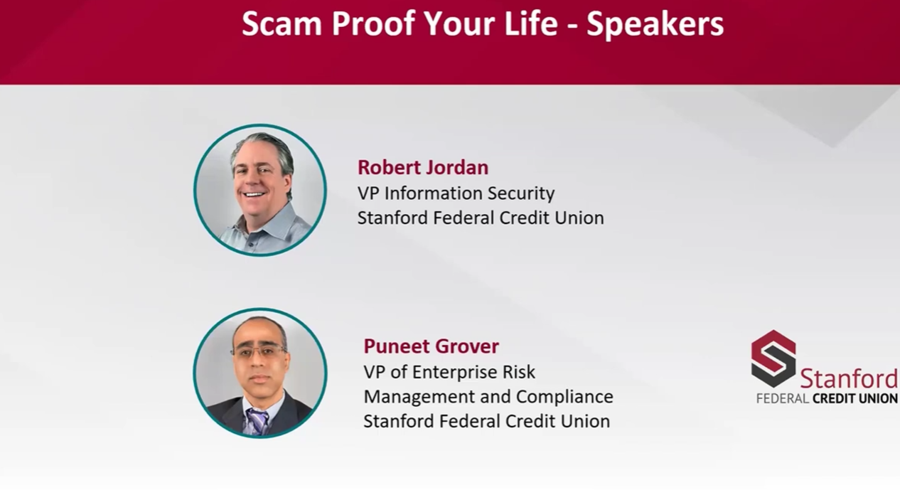
Fraud Prevention Webinar cover photo.
Protect yourself from fraud

Spot scams, recognize red flags, and protect your tech.

Identity theft

Take steps to help prevent or mitigate identity theft.

Common scams

Do you know how to avoid them?

Computer security

Don't let your technology be a vulnerability.

Debit and credit card security

Keep your cards and account safe.

Membership that gives you a whole lot more

Loyalty+ rewards, CashBack+ gift cards, way better cards, freebies and more.